TruCore's Strategic Play: Acquiring a Key FedEx-Leased Industrial Hub in Baton Rouge
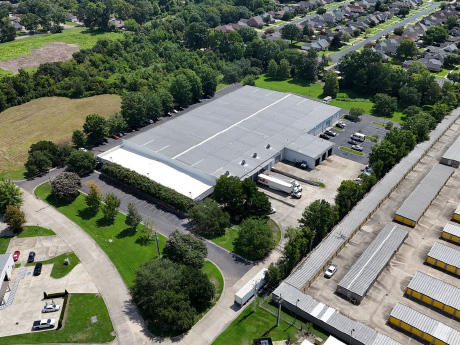
In a move that signals potential shifts within the local commercial landscape, TruCore Investments has successfully acquired a significant industrial facility in Baton Rouge, Louisiana. This 81,589-square-foot property, strategically located at 10781 Cousey Court, comes with a long-term lease to none other than global logistics giant FedEx, which has occupied the site since its construction in 1998. This acquisition is more than just a real estate transaction; it's a telling indicator for the Baton Rouge industrial real estate market, which has often been characterized by challenges even as national trends soar.
The deal, brokered by Alex Ruch of Elifin Realty, represents a substantial investment in a market that has, by many accounts, been experiencing a period of "gridlock and stagnation." For TruCore Investments, securing a Class B property with a blue-chip tenant like FedEx speaks volumes about the enduring value of well-located, functional industrial assets, especially in a region with such critical logistical importance.
Unpacking the TruCore Acquisition: Stability in a Dynamic Market
The details of TruCore's latest acquisition underscore a strategy focused on stability and proven returns. The property at 10781 Cousey Court spans an expansive 10.8 acres, providing ample space for logistics operations. Its designation as a Class B industrial facility suggests a property that, while not brand new, is well-maintained, highly functional, and offers excellent value – a sweet spot for many long-term investors. Crucially, the facility was fully leased to FedEx at the time of sale, ensuring immediate and reliable cash flow.
- Tenant Strength: FedEx, a global leader in package delivery and logistics, provides an exceptionally strong tenant covenant. Their long-standing occupancy since 1998 demonstrates the facility's strategic importance to their operations and offers TruCore a high degree of income stability.
- Location Prowess: Baton Rouge's position along the Mississippi River, coupled with its robust highway infrastructure, makes it a vital hub for regional and national distribution networks. Industrial properties here are inherently valuable due to their connectivity.
- Brokerage Expertise: The transaction highlights the crucial role of experienced local brokers like Alex Ruch of Elifin Realty, who possess an intricate understanding of the Baton Rouge market dynamics and can facilitate complex deals in fluctuating conditions.
For investors eyeing the Baton Rouge industrial real estate sector, this deal offers a clear example of successful investment in assets backed by strong tenants and strategic locations, even when the broader market faces headwinds.
Baton Rouge Industrial Real Estate: Navigating Stagnation Towards Growth
The narrative surrounding Baton Rouge's industrial real estate market has, for some time, diverged significantly from the national trend. While industrial markets across the U.S. have enjoyed robust growth fueled by e-commerce expansion and supply chain reconfigurations, Baton Rouge has struggled with what has been termed "gridlock and stagnation." This sluggishness can be attributed to various factors, including local economic conditions, specific supply-demand imbalances, and perhaps a slower pace of new, speculative development compared to other growth markets.
However, transactions like TruCore's acquisition could be a harbinger of change. It suggests that despite broader challenges, prime assets with established tenants remain highly attractive. The demand for modern, efficient logistics facilities is undeniable, and even a Class B property, when occupied by a company like FedEx, can be a cornerstone asset. This type of investment may inspire renewed confidence among developers and investors, potentially thawing the market's current state of "stagnation."
Understanding the Local Context:
- Aging Inventory: A significant portion of Baton Rouge's industrial stock may be older, necessitating strategic investments in upgrades or redevelopment to meet contemporary logistical demands.
- Specific Industry Needs: The market is heavily influenced by the petrochemical and energy sectors, meaning industrial demand often ties directly to the health and investment cycles within these industries.
- Opportunity for Value-Add: Periods of stagnation can present unique opportunities for investors willing to acquire underperforming assets and inject capital for modernization, thereby creating significant value.
The acquisition indicates a belief in the fundamental long-term value propositions of Baton Rouge industrial real estate, even if the short-term outlook has been cautious.
The Gulf Coast Advantage: Baton Rouge's Indispensable Strategic Edge
Despite local market fluctuations, Baton Rouge and the broader Gulf Coast region possess undeniable strategic advantages that position them as indispensable hubs for global trade and industry. As eloquently stated by the Baton Rouge Industrial Group (BRIG), Texas and Louisiana consistently lead the nation in per-capita exports, a testament to their unparalleled logistical infrastructure. The two keys to this success are simple yet profound: docks and pipelines.
From world-scale chemical manufacturing to critical energy production, both states benefit immensely from unmatched access to large, deepwater ports that efficiently move high-volume, high-value commodities to global markets. This robust port infrastructure, combined with extensive pipeline connectivity, forms the backbone of a sophisticated industrial ecosystem that keeps the Gulf Coast at the center of U.S. trade. These are the underlying strengths that continue to make Baton Rouge industrial's strategic edge so compelling for long-term investors.
Key Drivers of the Gulf Coast's Industrial Importance:
- Deepwater Ports: Access to major deepwater ports along the Mississippi River and the Gulf of Mexico facilitates the efficient transport of raw materials and finished goods, crucial for industries ranging from petrochemicals to agriculture.
- Extensive Pipeline Networks: A vast network of pipelines connects energy production sites, refineries, and chemical plants, ensuring a reliable and cost-effective flow of vital resources. This infrastructure is a significant draw for industrial tenants requiring consistent supply chain integrity.
- Established Industrial Ecosystem: Decades of industrial development have fostered a skilled workforce, specialized support services, and a business environment conducive to large-scale manufacturing and processing operations.
- Global Demand for Energy & Chemicals: As global demand for energy and downstream chemical products evolves, the strategic importance of this region's port infrastructure and pipeline reliability only grows, reinforcing its status as a critical economic engine.
The TruCore acquisition of a FedEx-leased facility perfectly aligns with this regional strength, capitalizing on the demand for efficient logistics support within this critical trade corridor. It underscores the fact that smart investment in maritime systems and pipelines is what truly moves exports and underpins regional economic vitality.
Implications for Investors and the Future of Baton Rouge
TruCore's acquisition of the FedEx facility is a significant transaction that offers valuable insights for both current and prospective investors in Baton Rouge industrial real estate. It demonstrates that even in a market characterized by stagnation, premium assets with strong tenants and strategic locations will always command attention and investment.
For Investors:
- Focus on Tenant Quality: The security of a long-term lease with a creditworthy tenant like FedEx significantly de-risks an investment. In uncertain markets, tenant strength can be a paramount factor.
- Location is King (Still): Properties that offer superior access to transportation infrastructure – highways, rail, and especially ports – retain their value and appeal regardless of broader market sentiment.
- Value in "Class B": Don't overlook Class B properties. While not cutting-edge, they often offer excellent functionality, competitive pricing, and attractive yields, especially when occupied by stable, long-term tenants. They can also be candidates for strategic upgrades.
- Look Beyond the Headlines: While general market reports might paint a bleak picture, specific submarkets or asset types can still present lucrative opportunities. Diligent, localized research is key.
For the Future of Baton Rouge:
This acquisition could serve as a catalyst, attracting further institutional and private capital into the Baton Rouge industrial market. As e-commerce continues its relentless expansion, the demand for warehousing, distribution, and last-mile delivery facilities will only grow. Baton Rouge, with its existing infrastructure and strategic location, is well-positioned to meet these needs, provided there's continued investment in modernizing its industrial stock and fostering a pro-business environment.
Furthermore, local economic development efforts, in conjunction with private investment, can leverage the region's inherent logistical advantages to attract new businesses and expand existing ones. The importance of reliable infrastructure, skilled labor, and supportive community initiatives cannot be overstated in turning stagnation into sustained growth.
Conclusion
TruCore Investments' acquisition of the 81,589-square-foot industrial facility leased by FedEx stands as a compelling testament to the underlying strength and future potential of the Baton Rouge industrial real estate market. In a climate often described as stagnant, this strategic move highlights the enduring value of well-located assets with stable, creditworthy tenants. It underscores that while the market may face specific challenges, Baton Rouge's unparalleled access to critical infrastructure – deepwater ports and extensive pipeline networks – ensures its vital role in the national and global supply chain. This transaction not only signals investor confidence but also offers a beacon of hope, suggesting that with smart investment and a focus on core strengths, the Baton Rouge industrial real estate sector is poised for a renewed period of growth and dynamism.